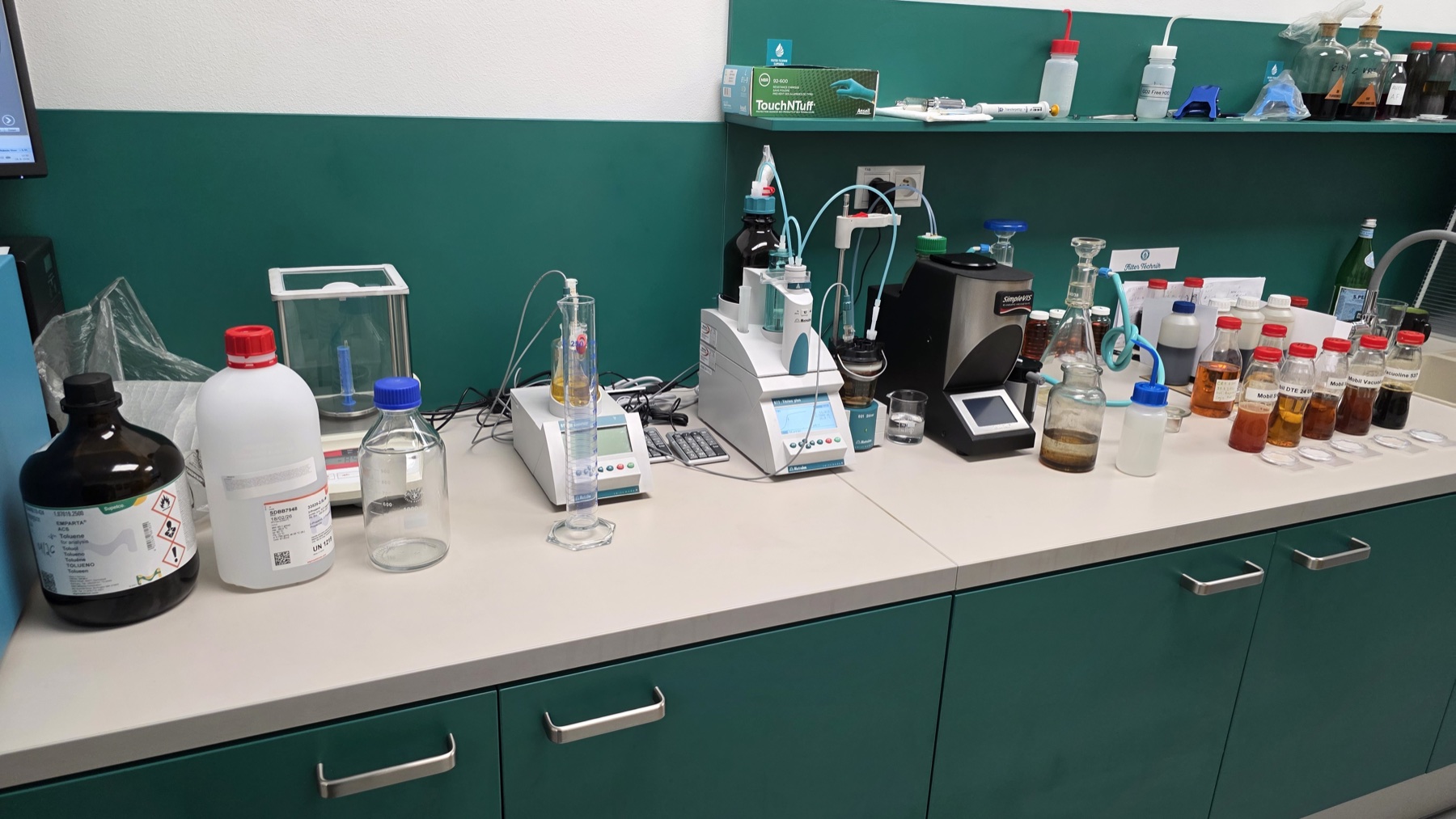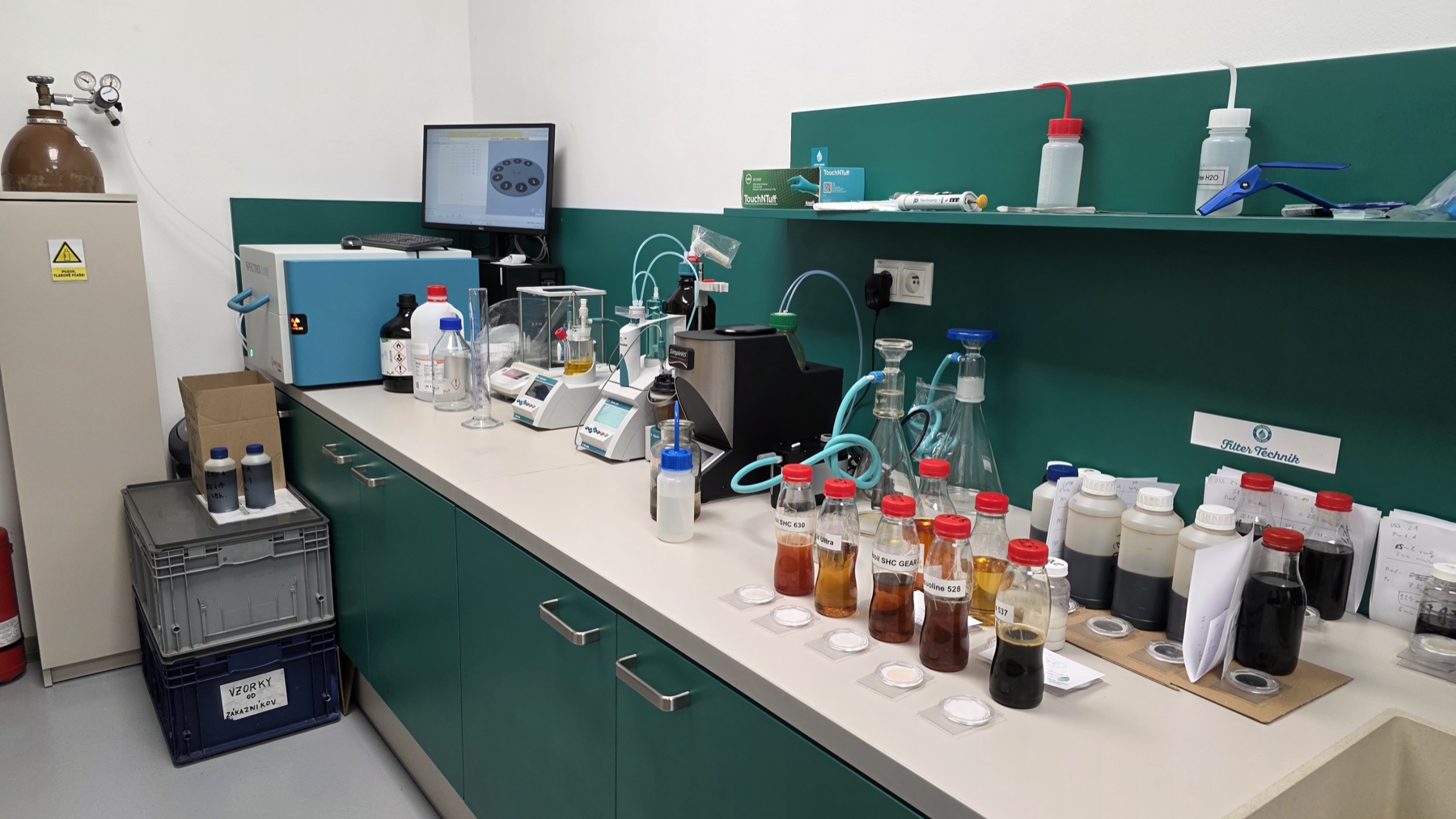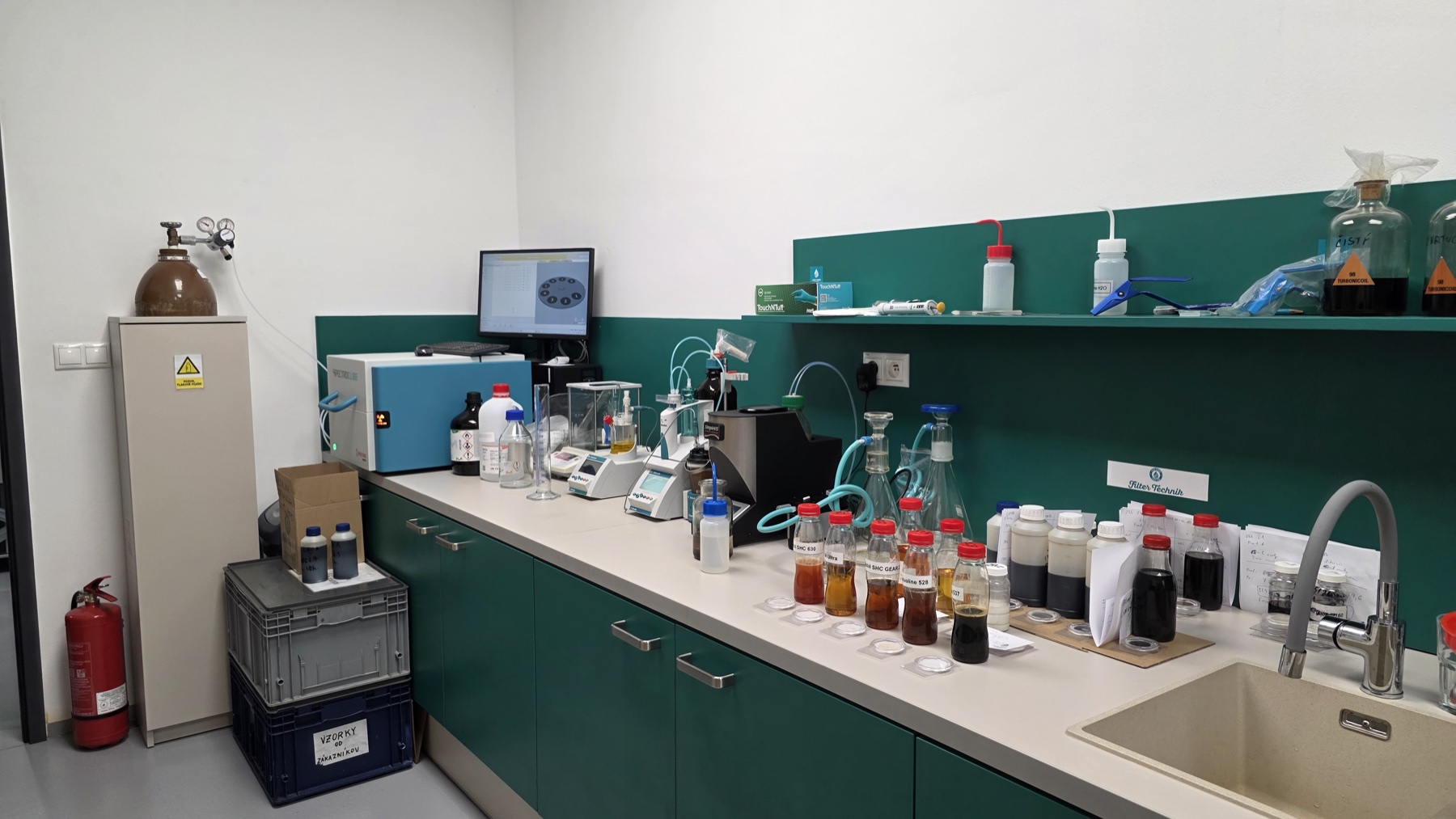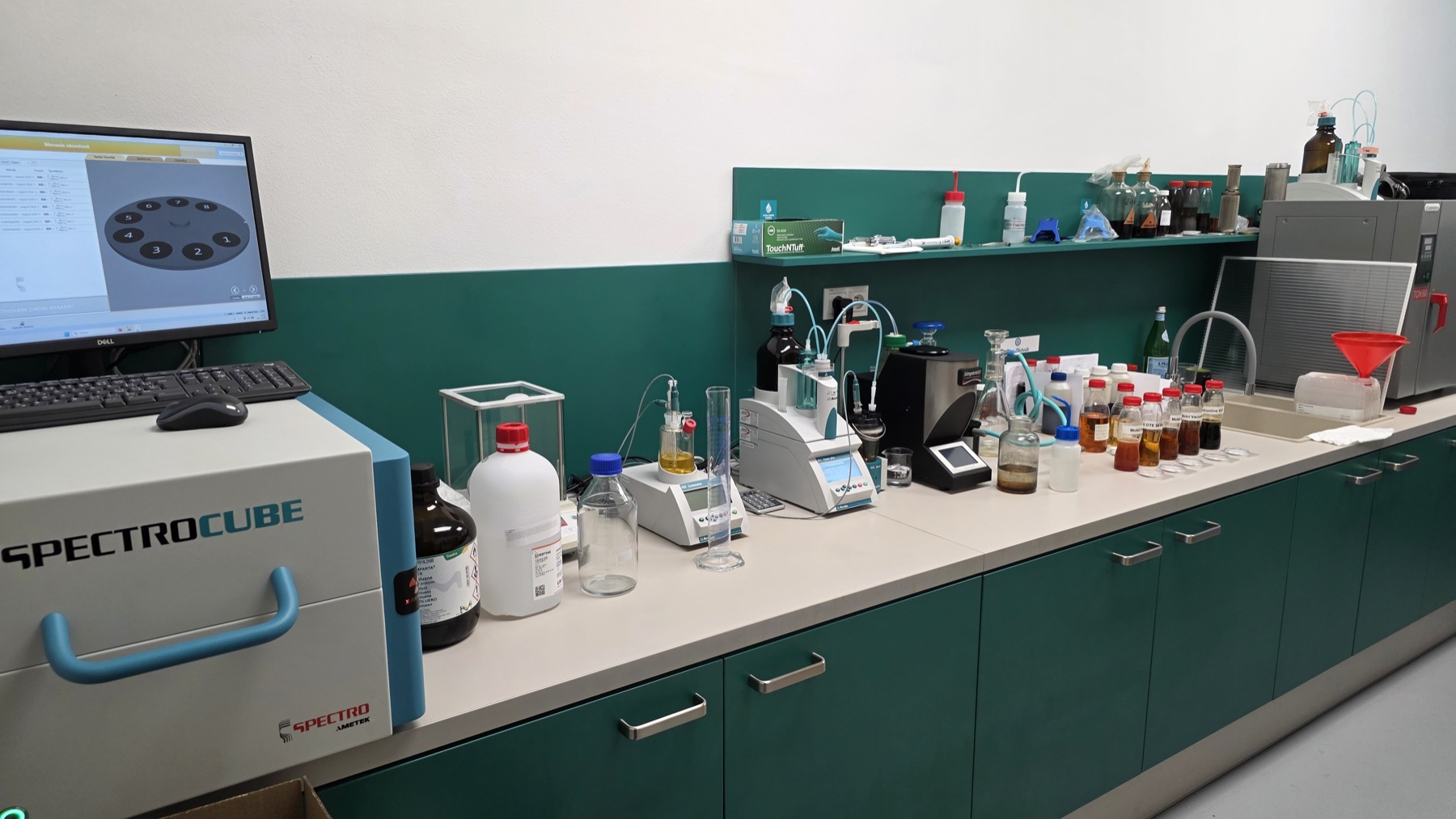
Introduction to Tribodiagnostics
Tribodiagnostics is a diagnostic method for detecting, evaluating, and reporting the presence of foreign substances in lubricants and process fluids, and their changes from both a quantitative and qualitative perspective.
It is a tool for the predictive maintenance of machinery and equipment utilizing lubricants and process fluids. It focuses on the qualitative and quantitative analysis of oil, determining its condition, lubricating properties, and contamination by foreign substances. This evaluation identifies the basic characteristics of the oil.

Lubricant Condition
Kinematic viscosity, acid number, oxidation, alkalinity, and changes in the chemical stability of the medium.

Contamination
Water content, cleanliness class, mechanical contaminants, and other foreign substances in operating fluids.

Machine Wear
Determination of wear metals and trends that indicate an emerging fault or incorrect operation.
What is monitored during evaluation
- kinematic viscosity,
- water content,
- cleanliness class and content of mechanical contaminants,
- content of oxidation products,
- antioxidant content,
- acid number,
- determination of wear metals.
Benefits for Operation
Appropriate interpretation of the current lubricant condition results, in terms of contamination and chemical degradation, allows for early warning of symptoms of an emerging machine or lubricant failure.
Based on the analysis results, we will recommend suitable solutions for maintaining or achieving a satisfactory lubricant condition, and its replacement if necessary.
The use of tribotechnical diagnostics for assessing the condition of lubricants and process fluids offers significant benefits not only from an economic perspective but also in terms of environmental care:
- reduces maintenance costs,
- reduces downtime due to the diagnosis of the actual condition of monitored equipment,
- extends the lifespan of equipment and lubricants,
- reduces the risk of accidents,
- reduces oil consumption,
- reduces the costs of generating, storing, and disposing of hazardous waste.
Photo Gallery